

The drone industry is continuously growing. The regulatory framework that allows these aircraft to operate safely is gradually evolving, enabling missions with growing associated risks, although it is not progressing at the same speed as the industry itself. To provide certainty to regulators, it is necessary to employ design methodologies that are recognized in the aerospace industry. Therefore, in this work, we addressed the design and manufacturing of a lightweight unconventional-configuration unmanned aircraft by adapting widely known conceptual design methodologies from manned aviation from authors such as Torenbeek and Roskam. Manufacturing was carried out by combining new techniques for the use of composite materials with additive manufacturing. A wide variability in the results was identified across the different models used. However, taking the most restrictive estimates into account, the results show that the structural weight estimates of the wing, made using classical manned aviation methods, align with the final weight obtained, assuming the wing can withstand the aerodynamic and inertial loads applied within a certain safety margin.
The drone industry is continuously growing. The regulatory framework that allows these aircraft to operate safely is gradually evolving, enabling missions with growing associated risks, although it is not progressing at the same speed as the industry itself. To provide certainty to regulators, it is necessary to employ design methodologies that are recognized in the aerospace industry. Therefore, in this work, we addressed the design and manufacturing of a lightweight unconventional-configuration unmanned aircraft by adapting widely known conceptual design methodologies from manned aviation from authors such as Torenbeek and Roskam. Manufacturing was carried out by combining new techniques for the use of composite materials with additive manufacturing. A wide variability in the results was identified across the different models used. However, taking the most restrictive estimates into account, the results show that the structural weight estimates of the wing, made using classical manned aviation methods, align with the final weight obtained, assuming the wing can withstand the aerodynamic and inertial loads applied within a certain safety margin. Read More
Related posts:
 Feasibility of Conflict Prediction of Drone Trajectories by Means of Machine Learning Techniques
Design Process and Environmental Impact of Unconventional Tail Airliners
A Systematic Approach towards the Integration of Initial Airworthiness Regulatory Requirements in Remotely Piloted Aircraft System Conceptual Design Methodologies
Development of safety performance functions (SPFs) to analyse and predict aircraft loss of separation in accordance with the characteristics of the airspace
Modeling the Propagation of Infectious Diseases across the Air Transport Network: A Bayesian Approach
Feasibility of Conflict Prediction of Drone Trajectories by Means of Machine Learning Techniques
Design Process and Environmental Impact of Unconventional Tail Airliners
A Systematic Approach towards the Integration of Initial Airworthiness Regulatory Requirements in Remotely Piloted Aircraft System Conceptual Design Methodologies
Development of safety performance functions (SPFs) to analyse and predict aircraft loss of separation in accordance with the characteristics of the airspace
Modeling the Propagation of Infectious Diseases across the Air Transport Network: A Bayesian Approach
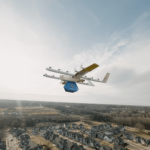 Walmart Drone Delivery Takes Off in 5 Major Cities