


By default, Windows only shows scroll bars when they are actually needed and when the operating system detects mouse movements. This behavior is intentional and part of the so-called Fluent Design of Windows. It’s intended to keep the desktop free of superfluous control elements. This effect can be observed, for example, in the list of apps in the Start menu, in the Microsoft Store, or in the Windows Settings app.
IDG
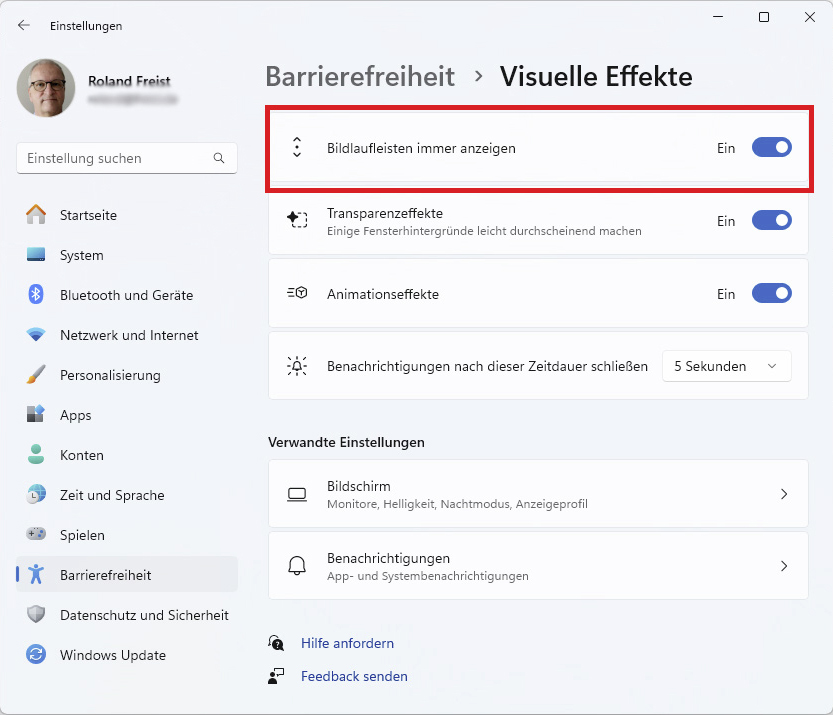
However, if you work intensively with the operating system, the constantly disappearing scroll bars can also be annoying. In this case, you can display the elements permanently. To do this, open “Settings” in the Start menu, then go to “Accessibility,” click on “Visual effects,” and set the switch next to “Always show scrollbars” to “On.”
Turning on this option can make navigating long lists much easier.
By default, Windows only shows scroll bars when they are actually needed and when the operating system detects mouse movements. This behavior is intentional and part of the so-called Fluent Design of Windows. It’s intended to keep the desktop free of superfluous control elements. This effect can be observed, for example, in the list of apps in the Start menu, in the Microsoft Store, or in the Windows Settings app.
In the Windows accessibility settings, you will find a switch that lets you make Windows display the scrollbars consistently.IDG
However, if you work intensively with the operating system, the constantly disappearing scroll bars can also be annoying. In this case, you can display the elements permanently. To do this, open “Settings” in the Start menu, then go to “Accessibility,” click on “Visual effects,” and set the switch next to “Always show scrollbars” to “On.”
Turning on this option can make navigating long lists much easier. Read More
Related posts:
 Stop squinting! 10 ways to make Windows easier on the eyes
 Upcoming Windows 11 feature aims to smartly extend laptop battery life
 New Windows 11 Start menu annoyingly hides oft-used actions
 Windows PCs let you adjust mice for left-handed use. Here’s how
 What to do if your mouse is double-clicking when you don’t mean it
 You can now control Chromebooks using head tilts and face gestures